
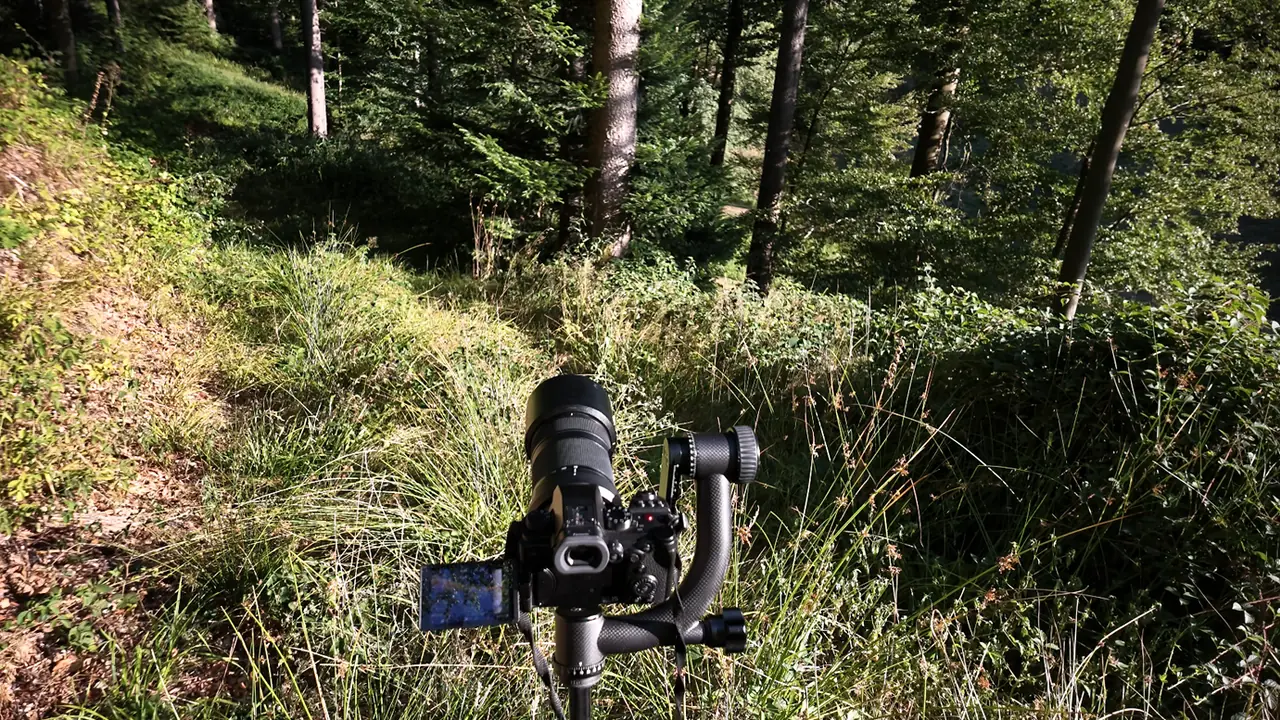
A peaceful nature image does not begin with a particular camera brand. What matters is where the camera stands, which part of the scene is included and whether that frame remains stable.
Three tools, three decisions
The tripod keeps the camera still. It also helps you choose height, angle and framing more carefully. Beside streams, on slopes or on soft ground, a secure position always comes first.
Camera position determines perspective. Moving closer to a stone or flower makes it larger in relation to the background. A higher or sideways position changes overlap and the visible surfaces within the scene.
Focal length mainly determines how wide or tight the view is from that position. A wide angle includes more surroundings and requires careful attention to the edges. A longer focal length can isolate one detail from a busy landscape, but it also makes small camera movements more visible.
The most useful order is therefore: choose position and height first, then select focal length.
Try it directly
- Before zooming, take a few steps left, right, forwards and backwards.
- With a wide angle, look for a clear foreground.
- Check tripod, focus and all four edges before recording.
- Watch a test clip: do autofocus or exposure adjust even though the scene remains still?
In short
Position shapes perspective, focal length chooses the frame and the tripod preserves that decision over time.