
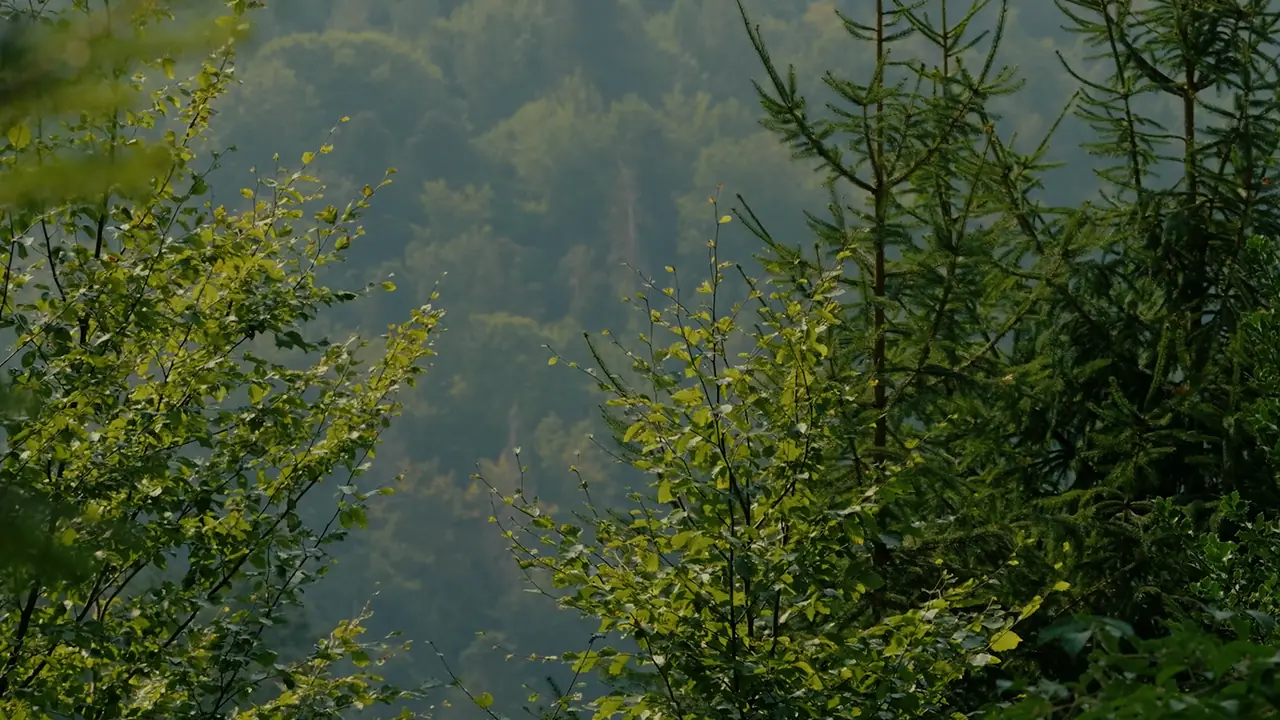
Bright and dark areas often sit close together in a forest. The sky above the trees may be very bright while the ground remains in shade. Water and wet leaves add small reflections.
Soft light helps these differences appear more gently. It does not simply mean low light, but smooth transitions between bright and dark.
When light becomes soft
Cloud, mist and a dense canopy scatter sunlight. Shadows become less harsh, and texture in moss, bark and stone remains easier to see.
Morning and late-afternoon light can also be soft. It often arrives from the side and gives surfaces more shape. The best time depends on the location, slope and surrounding trees.
For a longer take, notice whether the light remains stable. Small clouds passing across the sun can change brightness quickly. Moving leaves may also create flickering patches of light.
Protect the highlights
Reflections on water and bright leaves lose detail easily. The camera’s histogram and highlight warning help identify them. A dark forest scene may naturally place many values on the left of the histogram. The important point is that essential areas do not become completely black or white by accident.
Try it directly
- Watch the light for a few minutes before recording.
- Check a test clip rather than only a preview frame.
- If the contrast is too strong, first change position or direction.
In short
Soft forest light reveals detail without hard transitions. For a long take, its stability matters as much as its beauty.