
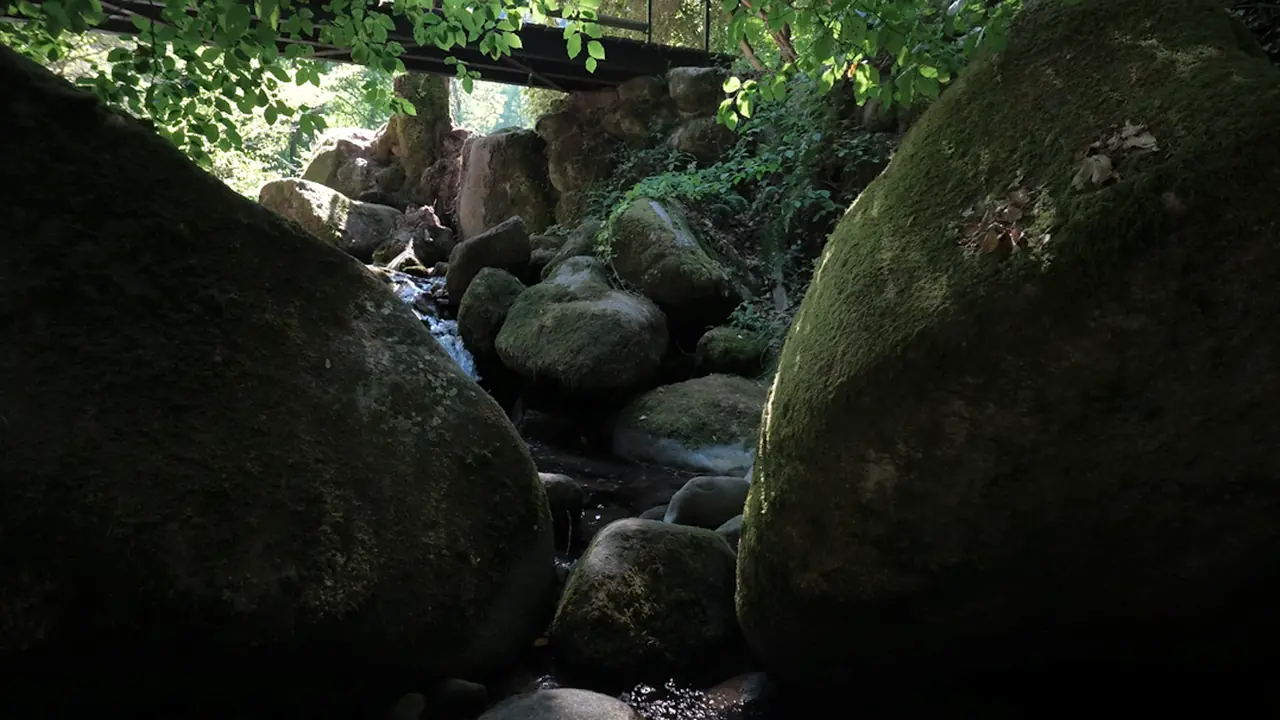
The most beautiful camera position is not always the best place for the microphone. From the same spot, wind, traffic or a loud stream may completely cover quieter sounds.
Natural sound therefore begins with listening, before recording starts.
Every direction sounds different
In a meadow, birds, insects, wind and perhaps a distant road blend together. A few steps away, the balance may already be different.
A microphone also hears differently from the human ear. Sounds that barely attract attention on location often become clear through headphones. A short test is usually more useful than heavy processing later.
A pure nature recording contains no intelligible conversations. If people come close, wait or repeat the take later. This preserves the quiet atmosphere and avoids unintentionally recording words that were not spoken publicly.
Distance matters too. Close to a small stream, separate drops and currents become audible. Directly beside a waterfall, only broad noise may remain. With animals, every approach ends where behaviour might be affected.
A directional microphone can make one source clearer, but it cannot replace a quiet location. Obstacles, wind direction and microphone aim still matter.
Image and sound should belong together
A wide landscape often feels convincing with spacious ambience. A close-up can carry a nearer, more detailed sound. The microphone does not have to sit exactly beside the camera, but the sound should suggest the same distance and mood.
Try it directly
- Listen quietly for one minute and notice unwanted directions.
- Make short headphone tests in two or three positions.
- Check the loudest expected moment and leave some headroom.
- Do not talk, walk or adjust the tripod during the take.
- Stop and begin again later if other people's voices can be understood.
In short
The best listening point comes from position, distance and direction – not only from editing later.